
English| EUR
Suggested for you
More currencies
Choose a language
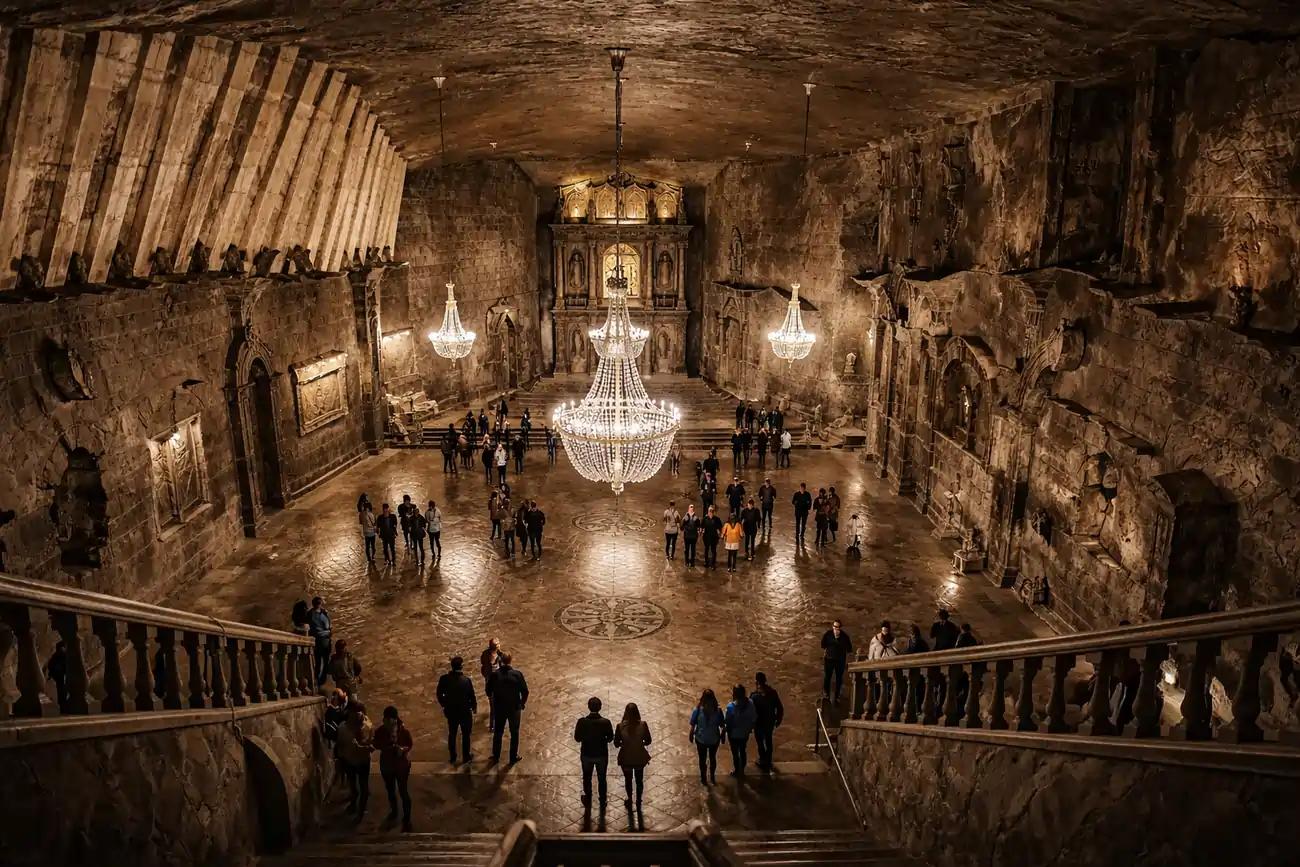
The underground chambers of Wieliczka maintain a stable microclimate throughout the year, independent of surface weather conditions. Understanding the temperature 135 meters below ground helps visitors prepare appropriate clothing for the two-hour guided route through the historic salt excavations.
Quick answer
The salt mines Krakow temperature remains constant at 14-16°C (57-61°F) year-round, regardless of surface conditions. The underground environment maintains approximately 70% humidity throughout all seasons. This stable climate persists across the 3.5-kilometer tourist route at depths ranging from 64 to 135 meters below the surface.
The thermal stability of Wieliczka's underground chambers stems from geological insulation provided by thick salt and rock deposits separating the excavated spaces from seasonal temperature fluctuations at ground level. While Krakow experiences summer highs above 25°C and winter lows below freezing, the salt mines Krakow temperature holds steady within a narrow 14-16°C range across all twelve months. This microclimate exists because the mine's depth places its chambers beyond the penetration zone of daily and seasonal thermal cycles. The rock salt formations surrounding the excavated spaces act as natural thermal mass, absorbing and distributing heat so gradually that short-term surface weather patterns exert no measurable influence on conditions 135 meters down. Humidity levels stay elevated due to minimal air exchange with the surface and the hygroscopic properties of halite deposits lining the walls. The constant cool environment affects visitor comfort differently depending on arrival season. Summer tourists descending from 30°C streets experience the underground climate as notably chilly, while winter visitors find the mine warmer than the frozen surface. The humidity makes the perceived temperature feel slightly cooler than the actual reading, particularly during extended stops in unheated chambers along the route. The 800-step descent generates body heat initially, but the tour's frequent stationary periods in large excavated rooms allow that warmth to dissipate. Understanding the stable thermal conditions at Wieliczka allows practical preparation regardless of visit timing. The underground climate neither fluctuates with Polish seasons nor varies meaningfully between morning and evening tour slots, making the same clothing recommendations valid for arrivals throughout the operating schedule from 08:00 to 18:00 daily.
“The rock salt formations act as natural thermal mass, maintaining 14-16°C regardless of whether Krakow's surface registers summer heat or winter freeze.”
The Wieliczka Salt Mine maintains a distinct subterranean microclimate that remains independent of external weather conditions. This consistent environment is a result of the mine's depth and the insulating properties of the surrounding salt deposits.
The temperature inside the salt mine remains stable year-round, typically ranging between 14 and 16 degrees Celsius. This provides a cool, constant environment for visitors regardless of the season above ground.
The subterranean atmosphere is characterized by high humidity and consistent temperatures due to the natural insulation of the rock salt layers. These conditions have remained largely unchanged for centuries.
The mine's air is known for its purity and high salt aerosol content, which creates a specific microclimate distinct from the surface. This environment is monitored to preserve both the health of visitors and the integrity of the salt structures.
Surface temperature fluctuations, such as summer heatwaves or winter freezes, do not impact the climate at the depths of the tourist route. Visitors experience the same thermal conditions throughout the entire calendar year.
The massive salt formations act as a thermal buffer, absorbing and releasing heat very slowly. This geological feature ensures that the deep chambers stay at a steady temperature without the need for artificial climate control systems.
Choosing the Best Time to Visit Salt Mines Krakow Temperature Aside: The optimal time to arrive is between 08:00–10:00 to avoid peak mid-day crowds. Regardless of the external climate, arriving early ensures shorter wait times for guided tours.
—
Visiting during weekday mornings provides the most consistent access and smallest groups.
Constant 14–16°C
Visiting in April or October offers a balance between moderate visitor numbers and a stable underground climate.
Constant 14–16°C
Expect higher density in corridors and longer queues during these months due to tourism volume.
Verdict: The best time to visit is Tuesday to Thursday between 08:00–10:00 during the months of April or October.
The mine holds a cool, steady climate year-round, and the tourist route covers roughly three kilometres of corridors plus 800 steps down. What you wear decides whether those two hours feel comfortable or clammy.
The Wieliczka Salt Mine welcomes visitors daily throughout the week. The facility operates on a consistent schedule to accommodate tours into the underground chambers.
Everything you need to know about salt mines krakow temperature
The temperature within the underground chambers remains constant, typically between 17 and 18 degrees Celsius throughout the year. This stable climate is characteristic of the deep subterranean environment of this UNESCO World Heritage site. Visitors often find this cool, consistent microclimate a relief during the hot summer months. Please plan your visit considering this specific internal condition to ensure personal comfort during the descent.